
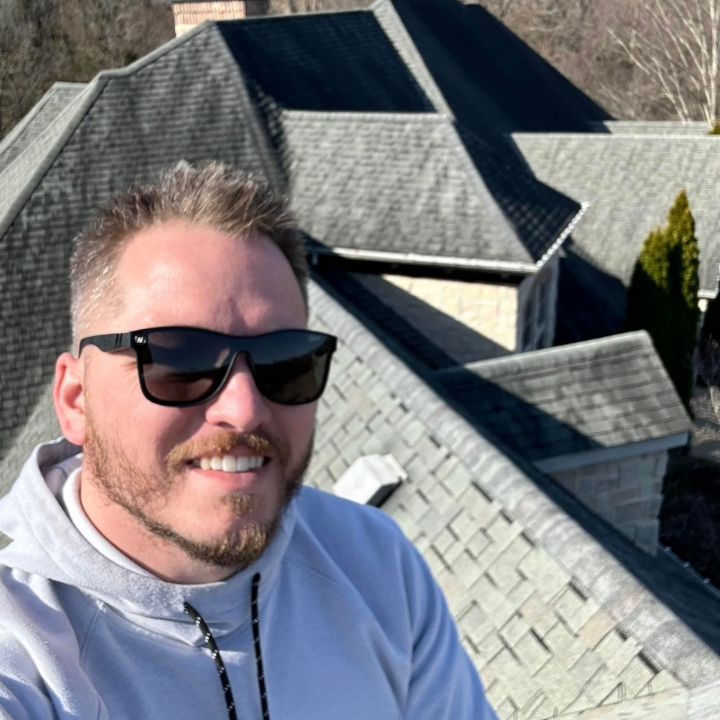
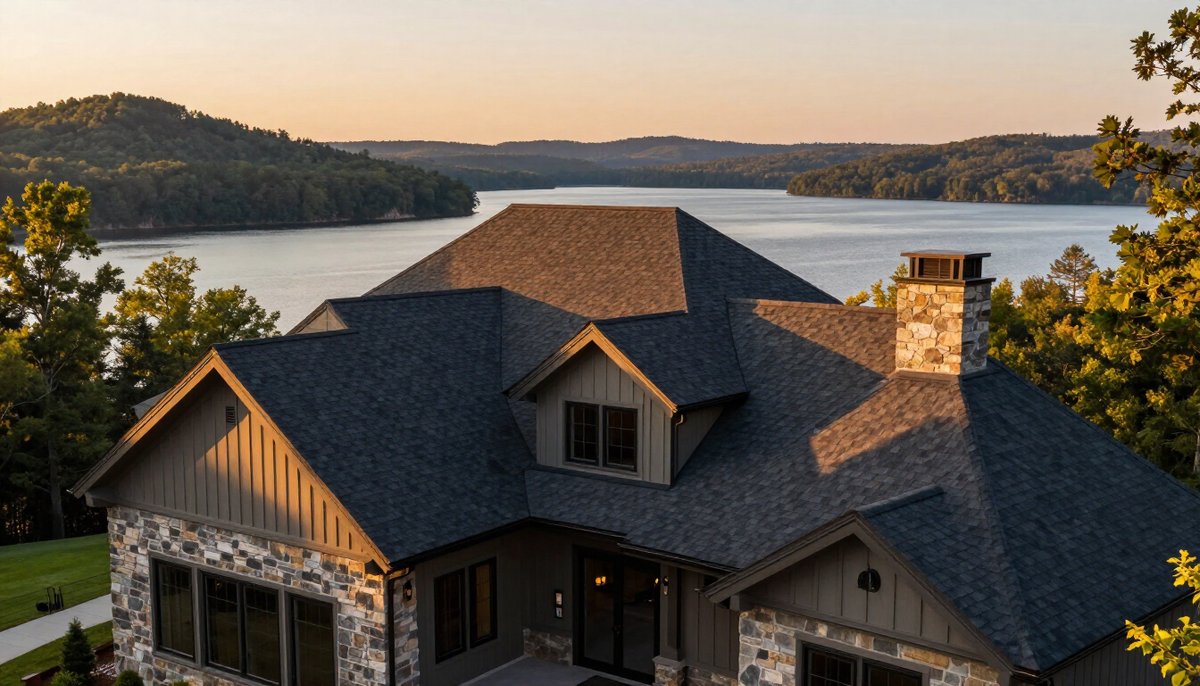
Black streaks on an Ozarks roof are caused by algae, not dirt. Humid Ozarks summers let a common roof algae grow on shingles, and algae-resistant shingles help by slowing that growth so your roof keeps its color.
What causes the black streaks?
The streaks are a type of blue-green algae that spreads on roofs in warm, humid climates. It feeds on moisture and on the limestone filler found in many asphalt shingles, and it shows up as dark streaks running down the slope. The Ozarks' hot, wet summers and shaded, tree-covered lots give it plenty to work with.
Are the streaks only cosmetic?
Mostly, yes. The main cost is appearance: a streaked roof can make an otherwise well-kept home look older. It is easier to prevent than to scrub away.
How do algae-resistant shingles help?
Algae-resistant shingles include special granules, often containing copper, that slow the growth of algae on the surface. They do not make a roof immune, but they help it stay cleaner for longer. When you choose a shingle, ask which algae-resistance warranty applies and what it covers. We write the exact manufacturer warranty name into your proposal.
What about cleaning an existing roof?
Avoid pressure washing a shingle roof, because it can strip granules and shorten the roof's life. If your roof is already streaked, a gentle cleaning can improve the look, but the long-term fix is a roof designed to resist algae from the start.
What helps prevent streaks on a new roof?
Choosing algae-resistant shingles, keeping tree limbs trimmed back so sunlight and airflow reach the roof, and keeping gutters clear. A complete Thunderhead roof system with balanced ventilation helps the whole roof dry out.
What should I do next?
Book a Free Estimate. We will photograph your roof, tell you what we see, and give you a detailed fixed price.